While scrolling on Pinterest one day, I came across this picture:
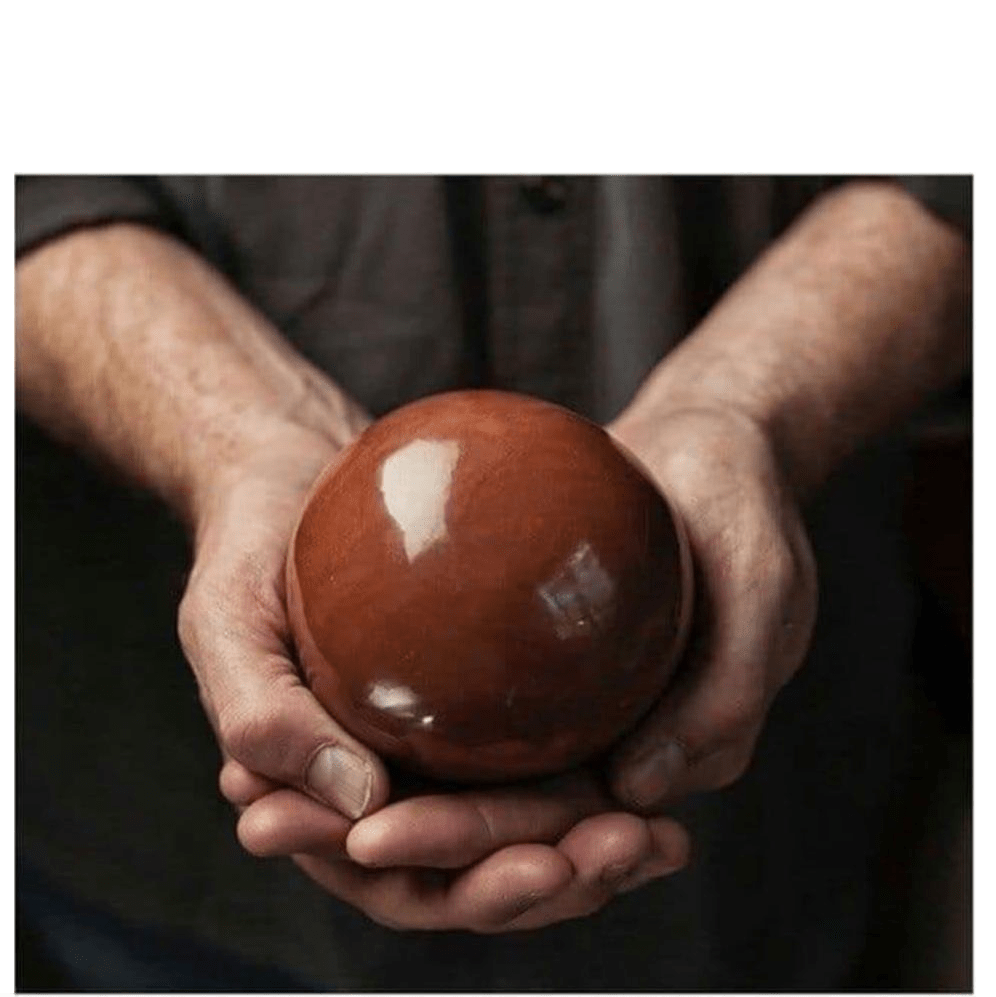
This is called ‘Dorodango’, otherwise known as the Japanese Art of Polishing dirt. You’ve maybe seen this image before in the form of memes, like so:

Why am I showing you this picture? Well, after seeing the meme, my sister and I started referring to editing writing as “polishing our ball of dirt”. That is to say, the initial finished WIP is usually pretty rough, to put it mildly.
Think of your completed novel as a regular old ball of dirt. It has its shape, its pretty put-together, but its not quite the polished gem you’re hoping it’ll be. I’ve said in previous posts that when you start writing your novel, quality should be one of the last things on your mind- your main focus should be finishing your book! Once you’ve finished writing, it’s time to shift gears. With a completed novel in hand, your focus needs to go to cleaning it up, fixing grammatical errors, improving your prose, and weeding out any inconsistencies or plot holes in your work. Now is the time to be nit-picky, and a little judgmental of yourself. Editing is probably the most tedious part of the writing process, but fear not! You already did the hard part: writing the novel itself.
Though the editing process is far from a one-size-fits-all affair, I’d like to share the editing process that worked for me. Hopefully some of my readers find it helpful!
The Second Draft
Your first draft is what you get once you type that last sentence of your novel. After I finished my first draft, I had to decide how I wanted to go about editing the 100,000 word megalith I had created. The first thing I did was print out my entire novel. Yes, all 400 double-spaced pages. In high school I was taught to edit essays by printing them out and manually writing edits on the page. This works for a variety of reasons.
For one, you’ve likely been working on your novel on a laptop or tablet, reading the words small and on a screen. By printing it out your eyes have to readjust, allowing errors to jump off the page. You could also change the font type or color to further trick your brain.
Second, hand-writing your edits allows you to record your thought process on the page as you go, while keeping your original writing in tact. I’ve saved all my drafts, just so I can have a record of what I’ve changed (especially for the big plot stuff!)
Once you’ve finished combing through your work, it’s time to put the edits to action. If you’re writing using Google Docs or Word (or a similar writing tool), create a copy of your first draft and implement all the edits on paper onto the computer. What you have now is a version that is (hopefully) free of most typos and grammatical errors.
The Third Draft
Rinse and repeat what you did for the second draft, printing out the most updated version of your novel. This time, try and put a focus on ways to improve the voice and pace of your writing. Pay attention to any scenes that drag or any parts of the plot that contradict each other. Put yourself in the reader’s shoes and put an emphasis on quality and readability of your work. Edit not just to fix mechanical errors, but larger issues within your novel that affect readability or stifle the narrative arc.
At this stage, I was interested in adding clarity to some of my scenes, particularly in the setting. I added and changed parts to give the reader a better sense of where my characters were in time and space. I also recognized at this stage that I hadn’t done a lot of descriptive work on some of my characters, so I went in and weaved in some descriptors to better make my characters jump off the page.
As before, take all these pen-and-paper edits and put them to work on the computer. At this point, draft three will be a solid body of work, with most grammatical and mechanical errors eliminated and with improved readability.
Future Drafts and Beta Readers
At this point in my editing journey I knew it was time to let others read and critique my work. Once I ended up with a novel that I thought was solid, I handed it off to a few beta readers. It’s always scary to give your beloved project to someone to get feedback. It can be hard to hear criticism, especially when you’ve worked so hard. However, getting an outside perspective on your novel is invaluable. You know your novel top to bottom at this point, and are admittedly a little biased. For me, I was very protective of my story and its characters, and to hear anything negative about my book stung. However, the feedback I received from my beta readers allowed me the opportunity to further improve. Beta readers don’t know your story going in, and have to meet all the characters organically, meaning if something isn’t clicking, or something doesn’t make sense, they will notice right away. You already know the story and characters at their core, now you get to see if they’ll be received the way you had imagined.
To find beta readers, you can always start with friends or family. I also used a handy website called Critique Match, the merits of which I go into here. The benefit of finding beta readers online is that they’re prepared to review your work in depth, and they have the time and space to do it. In my experience asking your mom (shout out to Mom, my very first beta reader) and siblings isn’t necessarily the best bet. People are busy. They have work, and school, and meals to cook- and won’t necessarily have time to read through your novel. Finding beta readers online usually means matching with other writers who are ready to critique and be critiqued..
Whoever you get to beta read, take both the good and the bad feedback with a positive attitude. Anyone who puts in the time and effort to read through a full-length draft of your work will no doubt have heaps of insight. They will also be the most likely to point out inconsistencies that you may have missed. I’ve had several beta readers, and each one has pointed out something new that allowed me to overhaul my novel and make it better and better.
With their feedback I made subsequent drafts, adding and deleting scenes until I came away with a finished product that I felt confident in.
Professional Editing
I was fortunate enough to have a professional editor in my network. I hired her to do a full edit after my third draft and boy oh boy, did she tear my work apart. In a good way, I should add. A professional editor will get into the real nitty-gritty of your prose. They have a trained eye that can weed out the smallest issues in your novel. A good editor will not only give line-by-line feedback, but will give a meta-analysis of your work as a whole. While most beta-readers look through the lens of a pleasure-reader, editors take a very professional and keen-eyed approach to your work. While getting a professional editor isn’t for everyone (it can be quite expensive) it’s an excellent way to get someone in the industry to offer honest feedback on your writing. Editors know what agents- and the public- are looking for, and will steer you in the right direction.
Once you get feedback from your editor, you guessed it- it’s time to create another draft. Use their feedback to improve your writing. Once you’ve gotten a professional once-over, it may even be a good idea to let your original beta-readers go through your freshly updated work. They’ll have a frame of reference to compare your new draft with your old, and will give you any new feedback to really whip your novel into top-shape.
The Polished Ball of Dirt
At this point, I am in the process of querying agents for my debut novel, and have created eight drafts in the process. Of course, it’s not necessary to redraft that many times. That’s just how it went for me. The important thing to note is that with each draft your novel will be improved. There should be no typos, no grammatical errors, and your narrative and characters should be well-refined. What started as a lump of dirt is now a shiny ball, cared for and shaped through hours of fixes and edits.
Before you proceed, pat yourself on the back. What you have now is a lovely, polished ball of dirt! Getting this far in the writing process is no easy task, in fact, many people never get past the planning stage! You’ve survived multiple rewrites, edits, and have probably heard loads of negative feedback. All of this work has come together to create an amazing body of writing.
For next steps, you’ll likely want to start looking for agents and/or publishers. That means creating a Synopsis and Query Letter. I have a few resources from my editor in a previous blog post, for those interested.
Good luck on the editing, and remember: never, ever give up on your ball of dirt!
 Augustine Harper
Leave a comment